On arriving without a map
The medina doesn't reward planning; it rewards arriving. Fes taught me that, and Rome and Mexico City keep retelling me.
The medina is the oldest continuously inhabited Islamic city in the world, and it wears that fact casually. Nine thousand alleys, roughly, depending on who is counting and whether the donkey is in them. You can step into it at the Bab Boujloud and be two turns from the tanneries or two turns from nothing at all, and both feel like arriving somewhere. The map on your phone loses the thread within a block. The locals use a combination of shop signs and smell — the leather near Chouara, the cedar near the carpenters, the mint across from the little juice stand that has been there longer than any of us.
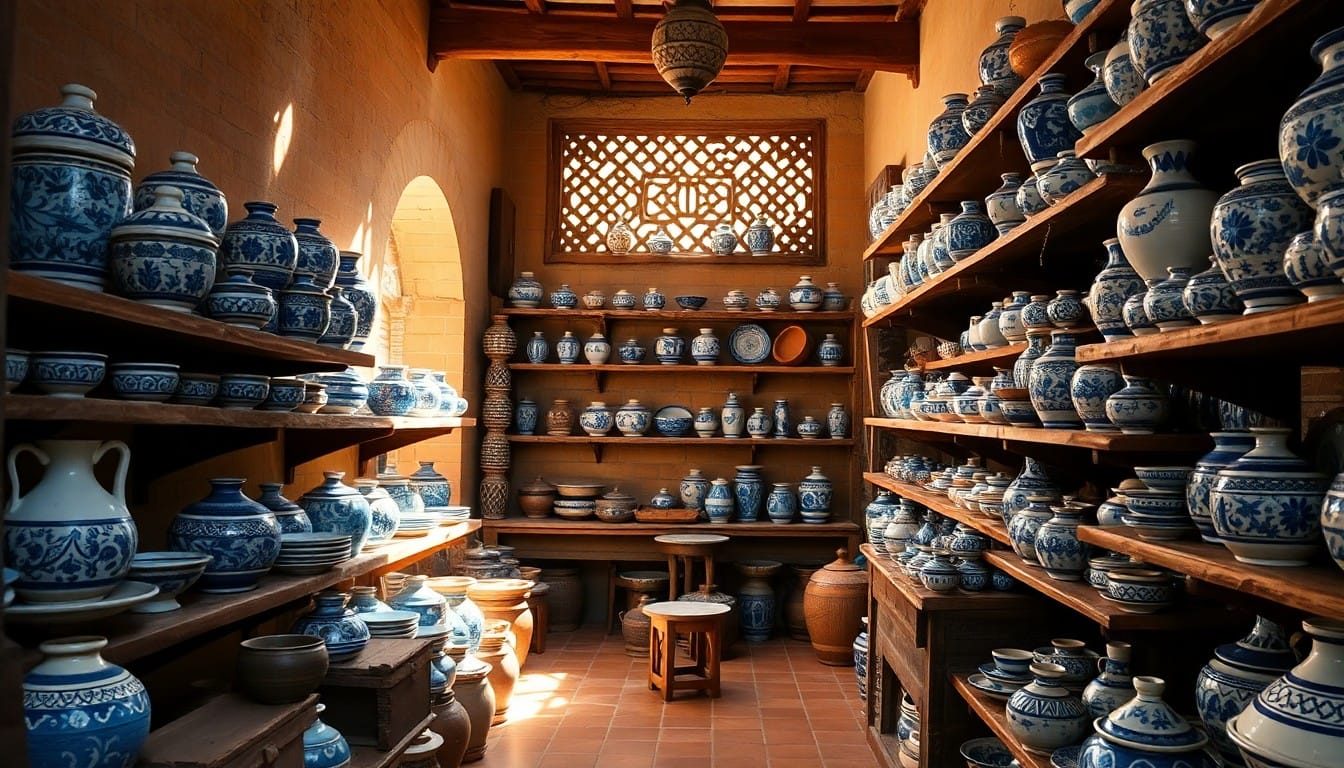
I came back the first time because I had something to buy. That is the shape of this city for me: you come for a reason that sounds practical, and you leave with something else. A pottery shop near Seffarine square, a coppersmith's rhythm in the background, a bowl with a folk pattern I had been looking at in photographs. I bought it. I carried it home in a rolled-up sweater. It sits on the shelf now next to an Amman bowl and a Tel Aviv cup, three Middle-Eastern objects making a small foreign diplomacy of their own.