Part one: the statute
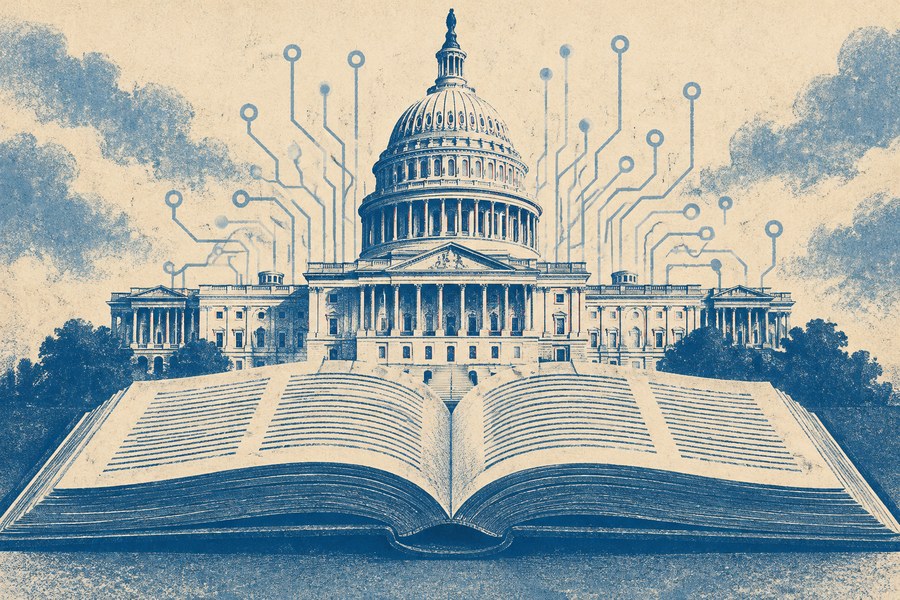
The statute centers on individual rights, responsibility that follows control, the right to use an agent, and enforcement. The appendix sets out the supporting rules for business, contracts and compliance.
Who is protected, and when
The law should start with the decision, not the technology. A covered decision is a consequential decision about a person where an AI system was a material factor. I would start with employment, housing, credit, insurance, education, health care access and essential services. A material factor means the system shaped the outcome, including by choosing which facts the human decision-maker saw. A person clicking "approve" would not take a decision outside the law.
The rights
A person affected by a covered decision gets six things.
- Notice. They are told, before or when the decision is made, that an AI system was a material factor.
- Principal reasons. They get the main reasons for an adverse result, in plain language, based on what actually drove it.
- Actual reasons. The explanation must accurately identify the actual principal factors used in the decision; an invented substitute rationale does not satisfy that duty. Credit law already requires that connection [1].
- Correction. They can see and fix the factual errors that mattered. A wrong employment date should not end an application.
- Human reconsideration. A person with authority to change the outcome reviews it on request.
- No waiver by fine print. These rights cannot be signed away in a click-through contract.
The EU AI Act provides notice and explanation rights for specified high-risk uses under Article 26(11) and Article 86 [2]. Article 86 applies when a deployer's decision rests on the output of a listed high-risk system and significantly affects the person. The American version should cover more of the decisions people actually face, using the material-factor test above, and be built so a small business can comply.
Colorado offers a domestic precedent: SB 26-189, enacted in 2026 with requirements starting in 2027, creates notice, explanation, correction and human-review duties in overlapping sectors [3]. The proposal here differs in coverage and adds private remedies.
The rest of the statute
The statute's working parts in brief; the appendix gives the detail.
- Responsibility follows control. The developer answers for the base system, the deployer for its configuration and the decision it imposes.
- Prices. Personalized pricing built on a person's own data must be disclosed, and raising the price of a necessity because a system inferred desperation would be barred.
- Agents that work for individuals. A person may authorize an agent to act on the person's own accounts for ordinary consumer tasks, and companies keep the protections they need against abuse.
- Licensed services. I propose that Congress push toward AI access in licensed professions.
- Enforcement. The FTC and state attorneys general can enforce, and people can bring their own claims.
- Room for business. Four boundaries keep the statute workable: ordinary assistance tools, a safe harbor for good practice, small business, and contracts between businesses. Small businesses keep all six rights with simpler compliance.
Preemption: a pause, then lasting rules
I want one national AI framework, not fifty separate rulebooks. Federal rights and lasting preemption should take effect together: once the full framework becomes law, it would replace state rules on the AI matters it covers, without an automatic end date. A separate, optional bridge could temporarily limit new state AI-specific requirements while Congress drafts, preserving existing state protections during that period - meaning laws in force when the bridge takes effect.
Both steps are proposals. Shorter moratoria with exceptions have been proposed before, including the five-year pause offered and withdrawn during the 2025 budget debate [4], and the 2012 consumer privacy framework paired national rights with preemption [5]. The design here conditions lasting preemption on the federal rights becoming law and preserves existing state protections during the bridge.
Lasting preemption must come with real rights and support across both parties. An inadequate national law should not displace state protections. A sound one should replace state additions on covered matters, protect American innovation and avoid copying the EU AI Act. Unlike the House discussion draft's three-year preemption limited to model development [6], mine would not sunset. Congress should nevertheless schedule a review.
This does not repeal state law generally. States keep their generally applicable consumer protection, fraud, civil rights, child safety and privacy laws on matters the national statute does not cover. The White House recommendations also preserve generally applicable state laws, along with state zoning and state procurement [7]. They do not list civil rights or privacy laws separately.
I would have the national bill set safety standards specific to AI. Where a general law reaches an AI matter the statute covers, I propose the national statute displace state rules on those AI matters; complementary existing laws, including state laws, would keep working alongside it. I want to unify as much as possible into one bill, and Congress would have to draw that line with care. The point is to give the federal framework and the private standards room to take hold before every state writes its own version. That is the bend in the curve: set national rules early, while the industry is still choosing its architecture.
Time for Congress to write the bill
The bridge would give Congress time to draft before new state AI rules set the terms.
The December executive order does not itself establish a new preemption statute. It directs litigation and agency action whose authority must come from existing law [8]. Federal statutes and valid regulations can preempt state law within their constitutional and delegated authority [9]. The proposed executive routes remain legally contested [10][11].
I recommend a short bridge statute temporarily preempting new state regulation of the AI matters the full framework is meant to cover. It would need more than a standstill order to the states: under the anticommandeering rule, Congress can regulate private conduct but cannot issue direct orders to state legislatures, and the Supreme Court struck down a federal ban on states authorizing sports betting on that ground [12]. A valid bridge needs a federal rule governing private conduct within Congress's power, with a defined preemptive scope. Drafting that rule well is the hard legal problem, and its durability in court would need real scrutiny. The bridge should have these limits:
- No displacement of general law. It leaves in place the states' generally applicable consumer protection, fraud, civil rights, child safety and privacy laws, and every right and remedy that exists today.
- A hard end date. The pause has a sunset written into the statute. I recommend Dec. 31, 2030, for the reasons below.
- No renewal. If Congress has not passed the framework by that date, the pause ends and states and governors are free to act. It does not renew unless Congress passes a new act.
The calendar runs through the 2028 election. A Democratic candidate should run on this framework in the next presidential campaign, and the new president and Congress should deliver it from 2029. These are my recommended dates, and Congress would set the final ones.
I am disappointed in Congress under both parties, and I expect little progress in the next two years. But I would not put all responsibility on President Trump; Democrats who gain power should make this a priority. My preference is a Democrat elected in 2028 carrying this pro-market framework. Still, I would not mind if President Trump led on this instead: I do not think the political circumstances are there, but I would find it excellent, because I ultimately want this to be a cross-partisan solution.
This framework is also a chance to bring Democrats and tech leaders back together around policy in a way they have not been before. Jeff Bezos recently argued that AI's productivity gains could let a family live on one income or a three-day workweek [13]; Michael Dell has said AI models need safeguards and controls, and that government has a role to play [14]. Optimism about what AI makes possible, with real rules underneath: that is this framework, and leaders like Bezos and Dell are the people I believe could get behind it.
- Run on it in 2028. The campaign is the country's chance to argue about AI nationally and to hand the winner a mandate. This framework should be a centerpiece of the Democratic platform.
- Pass the bridge in the first half of 2029. The new Congress's term begins Jan. 3, 2029 (Congress can set a different meeting date by law), and the presidential term begins Jan. 20 [15]. A bridge passed in the first half of 2029 pauses new state AI-specific rules while Congress drafts the statute.
- Enact the full framework by June 30, 2030. It gives the administration and Congress 18 months to finish what the bridge started before the Nov. 5 midterms [16]; Congress struggles to act in election years, and in September 2026 the Speaker signaled that the House would not act before a planned recess extending beyond Election Day [17].
- End the bridge on Dec. 31, 2030. A hard deadline with a buffer: six months after the June 2030 target, past the midterms. If Congress has not passed the framework by then, the pause ends and states are free to act; it does not renew without a new act.
If the framework passes earlier, lasting preemption replaces the bridge.
Congress could pass the bridge before 2029; it is helpful, not a prerequisite. The ask is narrow: depending on enactment, the bridge would last approximately eighteen months to two years, ending no later than December 31, 2030, without new state AI-specific rules on covered matters, with general consumer, fraud, civil rights, child safety and privacy laws untouched. The Senate voted 99-1 in July 2025 to strip a ten-year moratorium [18] - a vote against that broad freeze, not against preemption itself - and the House's current drafts would preempt narrower ground [6][19]. A short, tailored pause with a fixed end date is a different ask, and it should be argued on those terms.
The framework works even if the bridge never passes. Companies can begin building to voluntary standards now, under existing law; the statutory pieces - enforceable rights, the safe harbor and national preemption - still require legislation. State laws already in force keep applying in the interim, and states would keep writing new ones, so companies face a patchwork for longer. When Congress enacts the full framework, its preemption terms take effect on the schedule Congress sets. The bridge buys order; it is not the foundation.
Sources
Numbers in the text link here.
- CFPB, Regulation B, 12 CFR 1002.9 (notifications), paragraphs (a)(2) and (b)(2): lenders must give specific reasons for denying credit, or notice of the right to request them, and the reasons must indicate the principal reasons for the denial; official interpretations, comments 9(b)(2)-2 and -4. Open source (consumerfinance.gov) ↗
- EU AI Act, Articles 26(11) and 86. Article 26 notice provision: Open source (ai-act-service-desk.ec.europa.eu) ↗ Open source (ai-act-service-desk.ec.europa.eu) ↗
- Colorado SB 26-189, Automated Decision-Making Technology, enacted 2026; requirements begin in 2027 (official legislative summary). Open source (leg.colorado.gov) ↗
- Congressional Record, June 30, 2025: Blackburn-Cruz amendment proposing a five-year pause on state AI laws, offered and withdrawn during the budget debate. Open source (govinfo.gov) ↗
- Obama administration, "Consumer Data Privacy in a Networked World: A Framework for Protecting Privacy and Promoting Innovation in the Global Digital Economy," February 2012, pp. 35-38 (individual rights with enforceable codes of conduct). Open source (obamawhitehouse.archives.gov) ↗
- Great American AI Act discussion draft (Obernolte and Trahan, June 4, 2026): official section-by-section summary (Sec. 121: preempts state laws specifically targeting AI model development, excludes laws of general applicability and laws regulating AI use or deployment, sunsets three years after enactment); draft text. Introduction status: Forkast, Oct. 20, 2026 (secondary). Also CrossGov, Oct. 3, 2026; NCSL, Oct. 21, 2026. Open source (trahan.house.gov) ↗ Open source (trahan.house.gov) ↗ Open source (forkast.news) ↗ Open source (crossgov.com) ↗ Open source (ncsl.org) ↗
- White House, National Policy Framework for Artificial Intelligence: Legislative Recommendations, Mar. 20, 2026. Open source (whitehouse.gov) ↗
- White House, executive order on a national policy framework for AI, Dec. 11, 2025. Open source (whitehouse.gov) ↗
- U.S. Constitution, Article VI, Clause 2 (Supremacy Clause), via Cornell LII. Open source (law.cornell.edu) ↗
- Ropes & Gray, "Examining the Landscape and Limitations of the Federal Push to Override State AI Regulation," Mar. 11, 2026 (full article read). Open source (ropesgray.com) ↗
- Harvard Law Review Blog, "Executive Preemption and the Dormant Commerce Clause After Pataki and Paxton," Jan. 15, 2026 (full essay read). Open source (harvardlawreview.org) ↗
- Murphy v. National Collegiate Athletic Association, 584 U.S. 453 (2018). Open source (supreme.justia.com) ↗
- Fox News, Bret Baier interview with Jeff Bezos, report of Oct. 7, 2026. Open source (foxnews.com) ↗
- CNBC, "Michael Dell says government has a role in AI safety," Oct. 13, 2026. Open source (cnbc.com) ↗
- U.S. Constitution, 20th Amendment, sections 1 and 2. Open source (law.cornell.edu) ↗
- 2 U.S.C. section 7 (election day for Representatives). Open source (law.cornell.edu) ↗
- Axios, "AI panic sparks rare bipartisan moment on Capitol Hill," Sept. 15, 2026 (the Speaker's stated intentions, not proof of the eventual schedule). Open source (axios.com) ↗
- Senate Commerce Committee Democrats, "Senate strikes AI moratorium from budget reconciliation bill in overwhelming 99-1 vote," July 1, 2025. Open source (commerce.senate.gov) ↗
- H.R. 9925, FRONTIER Act (introduced July 23, 2026). Open source (govinfo.gov) ↗