Part two: the private-sector framework
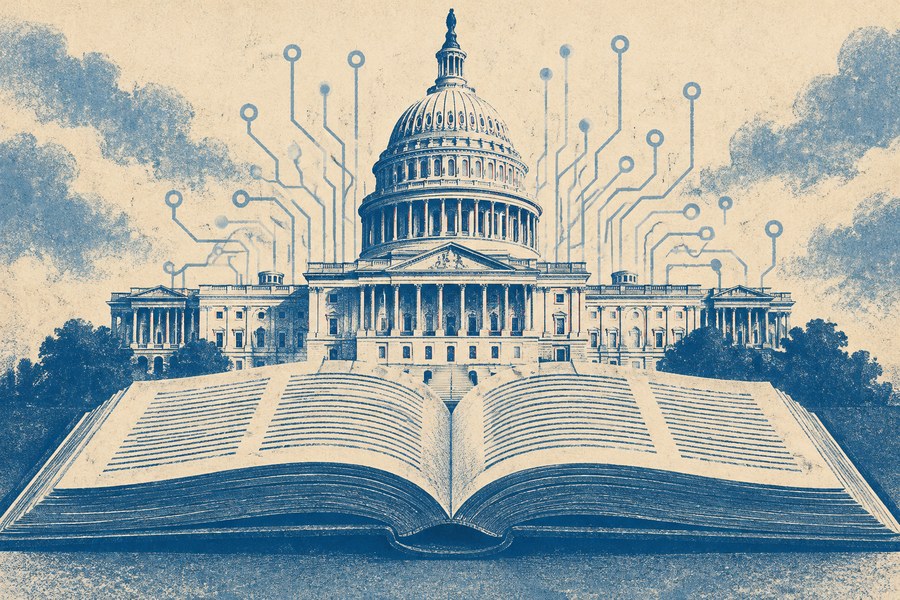
The statute sets rights and names what a recognized private framework must contain. Industry writes the technical specifications, which can adapt faster than legislation.
I propose an Agentic Infrastructure Framework. Developers, deployers, security researchers and consumer representatives would write and maintain it. Government recognizes it and sets the floor; it does not draft it. Its six parts consolidate existing industry and standards work, including NIST's agent identity and risk management efforts, CISA's secure-by-default guidance, the open agent protocols and ISO/IEC 42001, into a single form the statute can recognize.
Agent identity and authority
Every agent acting for a person carries a verifiable identity and a defined scope of delegated authority - limited, revocable and expiring. A store or platform can check who an agent works for and what it is allowed to do, and the person can see and revoke that authority at any time. NIST’s National Cybersecurity Center of Excellence published a concept paper on agent identity and authorization in February 2026 [1]; the framework turns that concept into an enforceable requirement.
Open protocols
Agents connect to tools and to each other through open, non-proprietary protocols, so no single company can decide whose agent is allowed to participate. The Model Context Protocol joined the Linux Foundation’s Agentic AI Foundation in December 2025 [2]; the Agent2Agent protocol is also a Linux Foundation project [3]. The framework names criteria for recognized protocols - publicly documented, implementable by anyone, free of single-vendor control - not winners.
Secure by default
Least privilege, protected credentials, isolated sessions, limited retention, and testing against attacks such as malicious instructions hidden in content an agent reads. These requirements build on CISA’s secure-by-default guidance and NIST’s secure development practices [4], applied to software that takes actions for a person rather than software that only answers questions.
Records
Consequential agent actions leave a tamper-evident log that the person can read and an auditor can verify. Records are kept for a set period and then deleted. The appendix leaves the retention period and the rules for minimizing personal data to the drafting process: the log exists to prove what happened, not to build a new database about people.
Risk management
Organizations operating under the framework run a documented management system using the NIST AI Risk Management Framework and its generative AI profile, or ISO/IEC 42001 [5][6]. The point is a system that is documented, reviewed and audited, not a certificate asserted on paper.
Conformance
Recognition requires independent attestation, a public registry of conforming products, versioned releases and a set review cycle, so buyers and regulators can check conformity rather than take a company’s word for it. NIST said in February 2026 that it is facilitating industry-led, voluntary standards for AI agents [7]; the framework gives that work a recognized home.
The statute sets conditions for recognition: open membership, published documents, seats for consumer and security representatives, regular review, and compliance with antitrust law. The framework may exceed statutory protections but cannot weaken or waive them. That is what keeps this capitalist and not captured. Companies compete on how well they meet the standard. They do not get to write their own exemption.
Warner's introduced AI AGENT Act likewise pairs recognized certification bodies with a rebuttable compliance presumption and security-related access procedures (S. 5051, section 3(d)(4)) [8]; its platform coverage differs from the access right proposed in Part one. The recognized framework would translate existing guidance into auditable requirements; management-system certification alone would not establish that a product is safe or legally compliant [5][6].
Sources
Numbers in the text link here.
- NIST NCCoE, concept paper on identity and authority of software agents, Feb. 5, 2026. Open source (nist.gov) ↗
- Anthropic, donation of the Model Context Protocol to the Agentic AI Foundation, Dec. 9, 2025. Open source (anthropic.com) ↗
- Linux Foundation, Agent2Agent protocol project, June 23, 2025. Open source (linuxfoundation.org) ↗
- CISA, Secure by Design; NIST SP 800-218A. Open source (cisa.gov) ↗ Open source (csrc.nist.gov) ↗
- NIST AI Risk Management Framework and AI 600-1, Generative AI Profile, July 26, 2024. Open source (nist.gov) ↗
- ISO/IEC 42001:2023, AI management systems. Open source (iso.org) ↗
- NIST, AI Agent Standards Initiative, Feb. 17, 2026. Open source (nist.gov) ↗
- Sen. Mark Warner, AI AGENT Act, introduced as S. 5051 on July 21, 2026 and referred to the Senate Commerce Committee (official record reviewed November 1, 2026; not enacted). Open source (govinfo.gov, bill text) ↗ Open source (govinfo.gov, bill status) ↗